

Most homeowners only think about their WiFi when something stops working. A video call freezes. A movie buffers. A smart device disconnects. The music cuts out by the pool. Suddenly, the network becomes impossible to ignore.
In today’s luxury homes, WiFi is no longer just about internet access. It has become the foundation that supports everything from streaming and gaming to security cameras, smart lighting, motorized shades, voice control, and whole-home automation. When the network struggles, every connected system feels the impact.
That is why more homeowners are starting to look beyond the router provided by their internet company and consider whether their network is truly built for the way they live.
Why the Free Router From Your Cable Provider Isn’t Enough
The router supplied by your internet provider is designed to work adequately for the average household. It is not designed to provide seamless coverage across a large home, multiple floors, outdoor living spaces, detached structures, or dozens of connected devices.
In larger homes, common problems often include:
- Dead zones in bedrooms or upper floors
- Weak signals on patios, pool decks, and outdoor kitchens
- Inconsistent performance when multiple devices are in use
- Slow speeds despite paying for high-speed internet
- Connectivity issues with smart home devices
The issue is not always your internet service. Often, the home’s network infrastructure is limiting performance.
Why Older Mesh Systems May Be Falling Behind
In the past, many homeowners upgraded to mesh WiFi systems to improve coverage throughout their homes. While those systems were a major improvement over a single router, technology has continued to evolve.
Many older mesh systems were designed before today’s smart homes became so connected. A modern luxury home may include dozens of devices simultaneously using the network, including:
- Smart TVs
- Security cameras
- Streaming devices
- Smart appliances
- Lighting control systems
- Voice assistants
- Gaming consoles
- Mobile devices
The reality is that today’s luxury homes place significantly greater demands on a network than they did even five years ago. Between 4K and 8K streaming, security cameras, whole-home audio, smart lighting, automation systems, and dozens of connected devices, the network has become one of the most critical systems in the home.
As more devices compete for bandwidth, older systems can begin to show their age. Even if the network appears to be functioning, performance may not be keeping pace with today’s demands.

Understanding WiFi 6
WiFi 6 was designed to improve performance in homes with many connected devices. Rather than simply focusing on speed, it was built to handle network congestion more efficiently and improve overall reliability.
According to Intel, WiFi 6 was specifically developed to improve performance in environments with numerous connected devices, helping networks operate more efficiently while reducing congestion and latency.
For many homeowners, WiFi 6 brought noticeable improvements in:
- Faster overall performance
- Better device management
- Improved efficiency in busy networks
- Reduced lag during streaming and gaming
WiFi 6 remains an excellent solution for many homes, particularly when paired with professionally designed access point placement and proper network infrastructure.
What WiFi 7 Brings to the Table
WiFi 7 builds upon the strengths of WiFi 6 while introducing even greater speed, lower latency, and more advanced traffic management.
New technologies such as Multi-Link Operation (MLO), 320 MHz channels, and 4K QAM allow WiFi 7 networks to move more data, reduce latency, and better support high-bandwidth applications throughout the home.
While many homeowners may not immediately notice the difference between WiFi 6 and WiFi 7 on a single device, the benefits become much more apparent when numerous devices are operating simultaneously throughout a property.
For luxury homes with extensive automation, multiple streaming zones, security systems, outdoor entertainment areas, remote work requirements, and growing smart home ecosystems, WiFi 7 helps build a stronger, more resilient network foundation.
More importantly, WiFi 7 is designed with the future in mind. As smart homes become increasingly connected, homeowners need a network that supports not only today’s devices but also tomorrow’s technology.
Outdoor WiFi Is No Longer Optional
Today’s outdoor living spaces are often just as connected as the interior of the home.
Outdoor TVs, audio systems, security cameras, smart irrigation systems, laptops, tablets, and mobile devices all rely on a strong wireless connection. Yet many homeowners discover that their network performance drops dramatically once they step outside.
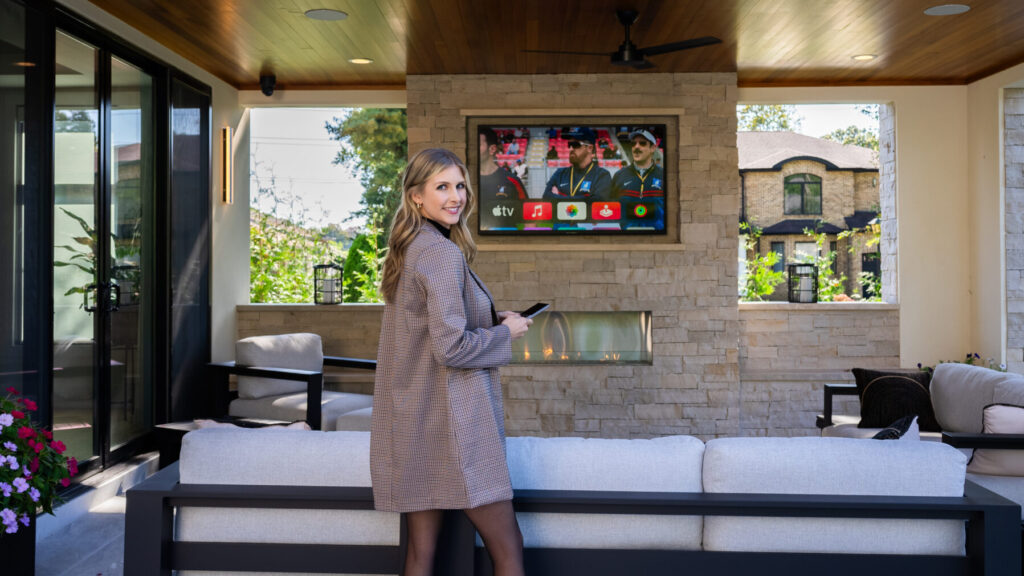
At ATTYWON, we design outdoor WiFi solutions that extend connectivity far beyond the walls of the home. Outdoor WiFi 6 and WiFi 7 access points can be strategically placed to provide reliable coverage for patios, pool decks, outdoor kitchens, gardens, and other outdoor entertainment areas.
The result is a network that performs consistently whether you’re inside the home, relaxing by the pool, or entertaining guests outdoors.
Why Hardwired Infrastructure Still Matters
One of the biggest misconceptions about modern networking is that everything should run on WiFi.
In reality, many devices perform best when connected via a wired network. Smart TVs, gaming systems, media servers, and other stationary devices can often be hardwired, reducing congestion on the wireless network and improving overall performance.
We recommend hardwiring devices whenever possible at ATTYWON as part of a professionally designed network strategy. The strongest wireless networks are often built on a solid wired foundation.
A Custom Approach to Home Networking
A reliable network is not simply a router sitting on a shelf. It is a carefully designed system that considers coverage, device density, security, future expansion, and how the home is actually used.
At ATTYWON, we design and install custom WiFi and networking solutions that support today’s connected lifestyles while preparing homes for tomorrow’s technology. Whether you’re upgrading an older mesh system, expanding coverage to outdoor living spaces, or building a fully integrated smart home, our team can help create a network that performs the way it should.
If you’re experiencing dead zones, inconsistent performance, or simply wondering whether your current network is keeping up with your home’s demands, we invite you to start a conversation. Contact us at info@attywon.com to learn more about custom WiFi and networking solutions for homes in New York City and South Florida.